
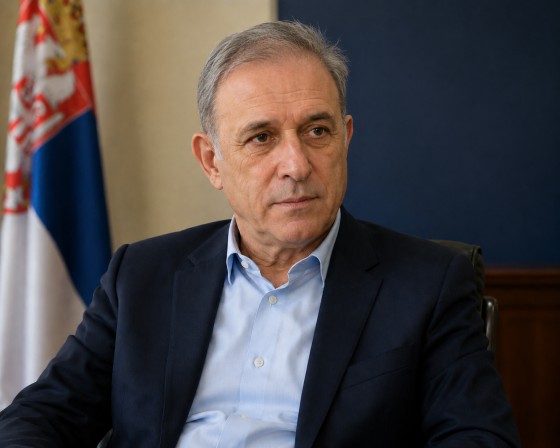
Serbian opposition leader Zdravko Ponoš recently faced police questioning over his allegations that the government deployed a sonic weapon against demonstrators during a large-scale protest in Belgrade on March 15, 2025. The authorities are investigating whether Ponoš’ claim, shared via social media, that a “sound cannon” was used, could be considered a criminal act of inciting panic and public disorder. The protest was held in response to a tragic incident at the Novi Sad railway station, where a canopy collapse resulted in casualties.
The March protest, one of the most significant in Serbia’s history, saw hundreds of thousands of people gathering to demand accountability for the railway station disaster. During the demonstration, attendees suddenly scattered in a brief stampede after reportedly hearing an unusual loud noise. This led to further speculation and unrest, prompting an official investigation into the events surrounding the protest and the alleged use of a sonic device.
As part of the investigation, Serbian prosecutors have been interviewing protest organizers, participants, and others who have commented publicly on the incident. The authorities are exploring the possibility that the sound cannon event was either staged or misrepresented. Following his police interview, Ponoš claimed that details were leaked to a media outlet with ties to the government, raising concerns about the impartiality of the investigation.
In response to these developments, a coalition of Serbian civil society organizations has urged the United Nations to conduct an independent inquiry into whether a sonic weapon was indeed used during the protest. They argue that the domestic investigation may have been compromised by political influences and stress the importance of a transparent and unbiased examination of the events to assure public confidence in the findings.