
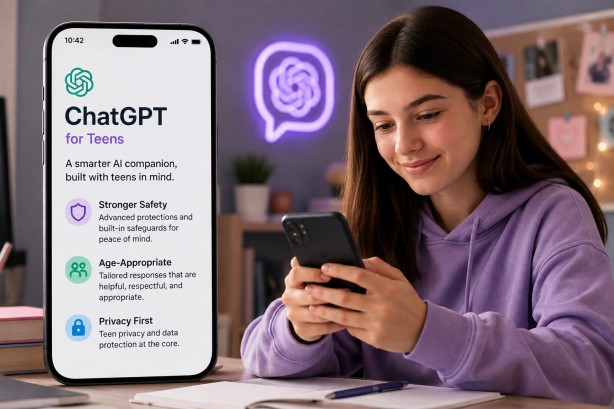
OpenAI has introduced a tailored version of ChatGPT aimed at teenagers aged 13 to 17, featuring enhanced safety protocols and age-appropriate protections. This version is carefully crafted to restrict discussions on sensitive topics such as self-harm, suicide, and romantic or sexual content, with the primary goal of providing a safer digital environment for young users. It is designed to support teens in using AI for academic purposes, daily inquiries, and companionship without exposure to inappropriate content.
To promote healthier interactions with AI, the teen-focused ChatGPT includes functionality that allows parents to establish ‘quiet hours’ during which their children cannot access the platform. Additionally, in scenarios deemed high-risk, the system can notify parents with safety alerts. OpenAI is also implementing extra precautions concerning sensitive issues, like eating disorders, by limiting harmful information and guiding users to seek offline support when needed.
Recognizing the potential for teens to form unhealthy emotional attachments to AI, OpenAI has configured this version of ChatGPT to avoid suggesting that it possesses personal feelings, consciousness, or emotions. The company’s approach aims to prevent the development of such emotional dependencies, ensuring that interactions remain grounded and appropriate for teenagers.
The service employs age-assurance technology to estimate whether a user is under 18, using various interaction patterns to make this determination. Users identified as minors are automatically transitioned to the teen version, which comes with these additional safeguards. This proactive measure ensures that teenagers engage with the AI in a manner that is secure and suitable for their age group.
In the realm of education, ChatGPT for Teens is crafted to encourage critical thinking and problem-solving among students, rather than merely providing them with direct answers or completing assignments on their behalf. This initiative is part of OpenAI’s broader effort to position AI as an aid in learning rather than a substitute, helping students to engage deeply with their educational material.